
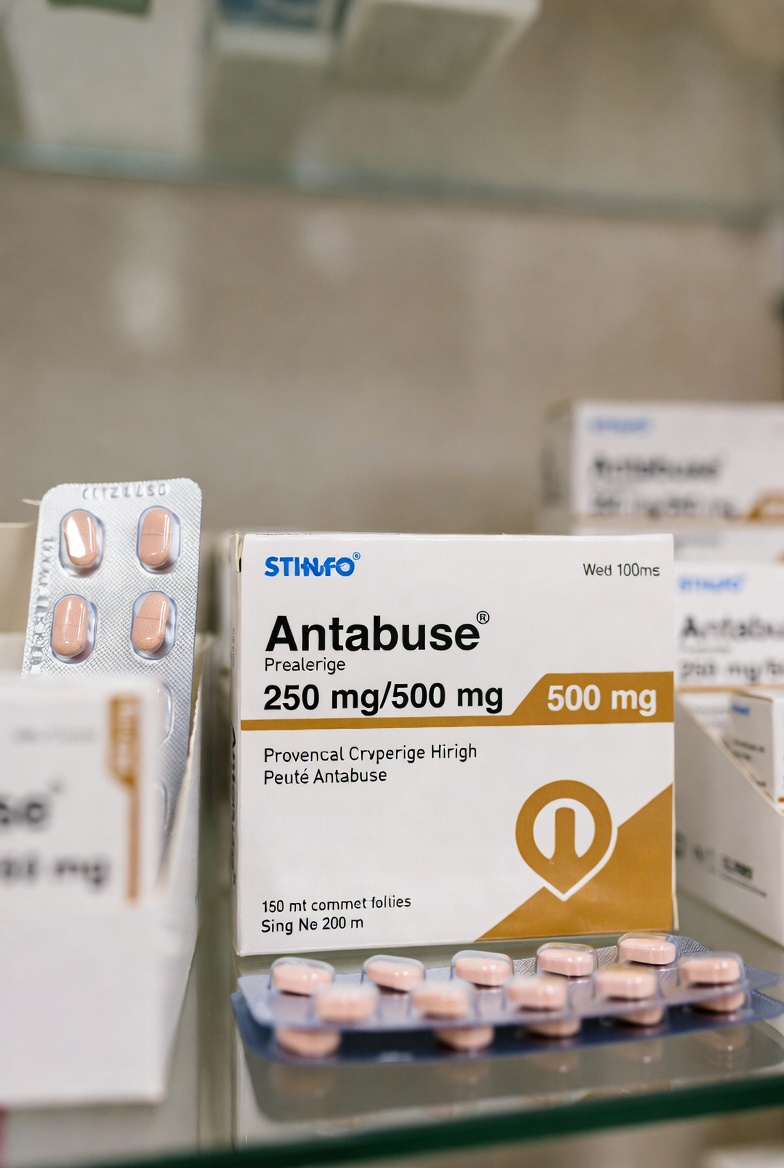



Antabuse Rx Only
Disulfiram tablets · Alcohol deterrent therapy
Antabuse is a prescription disulfiram tablet used as an aid in the management of selected patients with alcohol use disorder who want to maintain sobriety as part of a larger treatment plan. This page explains how it actually works, what hidden alcohol exposures matter in real life, and why this medication only makes sense when the patient fully understands the consequences of drinking on it.
$34.20
- Prescription required. We do not dispense disulfiram without a valid U.S. prescription.
- Do not start it until you have been alcohol-free for at least 12 hours.
- Alcohol reactions can still happen for up to 2 weeks after the last dose.
- This medication works best as part of a treatment plan, not as a stand-alone “willpower pill.”
Key facts about Antabuse
- Antabuse does not cure alcohol use disorder and it does not directly remove craving.
- Its purpose is to create a strong, predictable consequence if alcohol is consumed.
- It only works when the patient knowingly chooses this kind of accountability and supportive treatment is in place.
- Even small or “hidden” alcohol exposures can matter, including some medicines, sauces, vinegars, aftershaves, and other alcohol-containing products.
How ordering Antabuse works
- Send us your prescription online, ask your prescriber to send it, or transfer it from another pharmacy.
- We review the prescription, confirm that the patient understands the alcohol interaction, and screen for practical counseling issues such as hidden alcohol exposure and liver-safety concerns.
- Choose available pickup or delivery options for your ZIP at checkout.
Important safety information
Do not use if
- You are currently intoxicated or have recently consumed alcohol.
- You cannot reliably avoid alcohol-containing products or the medicine is being given without your full knowledge.
- You have severe heart disease, coronary occlusion, psychosis, or a known hypersensitivity to disulfiram or certain related thiuram compounds.
Common side effects
Common side effects can include drowsiness, tiredness, headache, acne-like rash, skin rash, impotence, and a metallic or garlic-like taste. Some early effects may ease with time or dose adjustment.
Call your clinician promptly for
Symptoms of hepatitis such as unusual fatigue, weakness, loss of appetite, nausea, vomiting, dark urine, or yellowing of the eyes or skin, as well as numbness, mood changes, or any alcohol-reaction symptoms after accidental exposure.
This page is informational and does not replace advice from your clinician or pharmacist.
What is Antabuse?
Antabuse is a prescription tablet containing disulfiram. It is used as an aid in the management of selected patients with chronic alcohol use disorder who want to remain abstinent so that counseling, recovery structure, and supportive therapy have a better chance to work.
What Antabuse is used for
Antabuse is used to support sobriety in patients who knowingly choose a medication that makes drinking alcohol physically unpleasant and potentially dangerous.
- Alcohol use disorder recovery plans built around abstinence
- Patients who want a strong external barrier against impulsive drinking
- Structured treatment plans that include counseling, supervision, or accountability
- Longer-term relapse prevention when the prescriber believes enforced sobriety is appropriate
It is not a cure for alcoholism, and when it is used without motivation or supportive treatment, it is much less likely to change the drinking pattern in a meaningful way.
How it is taken
Take Antabuse exactly as prescribed, and never start it until at least 12 hours after the last alcohol exposure. Initial therapy is often up to 500 mg once daily for 1 to 2 weeks, followed by a maintenance dose that is commonly 250 mg once daily, with a typical range of 125 mg to 500 mg daily and a maximum of 500 mg per day.
| Phase | Typical note |
|---|---|
| Initial phase | Up to 500 mg once daily for 1 to 2 weeks, when prescribed |
| Maintenance | Commonly 250 mg once daily; usual range 125 mg to 500 mg daily |
If the medicine makes you drowsy, the prescriber may prefer bedtime dosing. If you miss a dose, take it when remembered unless it is almost time for the next dose, and do not double up.
Warnings and interactions
- Alcohol reaction: Even small amounts of alcohol can cause flushing, throbbing headache, nausea, vomiting, sweating, chest pain, palpitations, low blood pressure, shortness of breath, confusion, collapse, arrhythmias, seizures, and in severe cases death.
- Alcohol can be hidden: Avoid alcohol in cough syrups, tonics, sauces, vinegars, aftershaves, some mouth and skin products, and other disguised sources.
- The risk outlasts the last tablet: Reactions may still happen for up to 14 days after stopping disulfiram.
- Liver toxicity: Severe and sometimes fatal hepatitis has been reported, even after months of therapy and even in patients without prior liver disease.
- Drug interactions: Important interactions include alcohol-containing preparations, metronidazole, and caution with phenytoin and some other medicines.
- Use caution with certain conditions: Extra caution may be needed in patients with diabetes, hypothyroidism, epilepsy, brain injury, kidney disease, or liver disease.
Missed dose guidance
Take the missed dose as soon as you remember it, but skip it if it is almost time for the next scheduled dose. Do not take two doses at once to make up for a missed tablet.
Storage
Store at room temperature in a tight, light-resistant container, away from excess heat and moisture, and out of reach of children.
Practical pharmacist guidance
The most useful way to think about Antabuse online is not as a craving treatment, but as a decision-architecture treatment. It does not make alcohol irrelevant; it makes the act of drinking harder to turn into a “just this once” mistake. The patients who do best with it are usually not the ones looking for a miracle tablet. They are the ones willing to build a clean environment around it. That means doing a real alcohol audit at home before the first dose: not just wine and liquor, but cough syrups, cooking wine, vanilla extract habits, aftershaves, mouth products, and the little routines that nobody remembers until they suddenly matter. Another detail people underestimate is timing after stopping. Some patients think, “I skipped it for a day or two, so I’m safe now,” and that is exactly the kind of misunderstanding that gets people into trouble, because disulfiram can keep reacting with alcohol well after the last tablet. The other thing I would tell any serious patient is this: if you are taking Antabuse, make the dose visible in your life. Put it on the same daily anchor, tell the people who need to know, carry the ID card, and do not treat it like a secret experiment. A hidden medication plus hidden alcohol exposure is one of the worst combinations in pharmacy. A deliberate medication plus a deliberate environment is where Antabuse becomes genuinely useful.
FAQ
Do I have to be completely alcohol-free before starting Antabuse?
Yes. You should not take the first dose until you have been abstinent from alcohol for at least 12 hours.
How long after stopping can alcohol still cause a reaction?
A reaction can still occur for up to about 2 weeks after the last dose.
Does Antabuse reduce craving?
Not directly. Its main role is to create a strong deterrent to drinking so that the rest of the recovery plan has more support.
What counts as “hidden alcohol”?
Alcohol may show up in some cough syrups, sauces, vinegars, mouth and skin products, and other alcohol-containing preparations, so label-checking matters.
Sources and medical review
Medically reviewed by Judy Doyle, PharmD — Licensed Pharmacist (NPI 1699814004) · Last updated
Price and insurance estimator
Reviewed by our pharmacist
Judy Doyle, PharmD — Licensed Pharmacist (NPI 1699814004)
Judy Doyle, PharmD reviews patient-facing medication content for clarity, safety framing, and pharmacy practicality.
With Antabuse, the pharmacy win is rarely just getting the bottle into someone’s hand. It is making sure the patient understands that this is a medication for planned sobriety, not improvised sobriety. The better the preparation around hidden alcohol, family awareness, and daily routine, the safer and more useful disulfiram becomes.
How to spot a legitimate online pharmacy
- Requires a valid U.S. prescription for prescription medications.
- Does not downplay severe alcohol-drug reactions for the sake of easy conversion.
- Displays a physical address and pharmacy licensing information.
- Uses secure checkout and clear privacy practices.
- Offers pharmacist access for counseling questions before dispensing.
Verify licensing through your state board of pharmacy or NABP resources.